Global Cancer Screening Coordinates & International Diagnostic Cost Benchmarks
Two practical questions confront globally mobile patients, immigrants, and uninsured or high-deductible adults: First, why do national screening guidelines in Japan, South Korea, and China include routine gastroscopy and nasopharyngeal screening while U.S. guidelines do not? Second, when a screening test turns positive or requires high-resolution diagnostic imaging (such as multiparametric MRI, diagnostic colonoscopy, or PET-CT), why do hospital self-pay prices diverge so dramatically across borders?
Optimal cancer screening depends on regional disease prevalence and healthcare financing. While Western guidelines focus on breast, colorectal, lung, and cervical cancer, East Asian national programs add upper GI endoscopy for gastric cancer and EBV DNA testing for nasopharyngeal carcinoma. Furthermore, when a screening test triggers a diagnostic MRI, CT, or endoscopy not covered as preventive care, out-of-pocket costs vary up to 8-fold internationally.
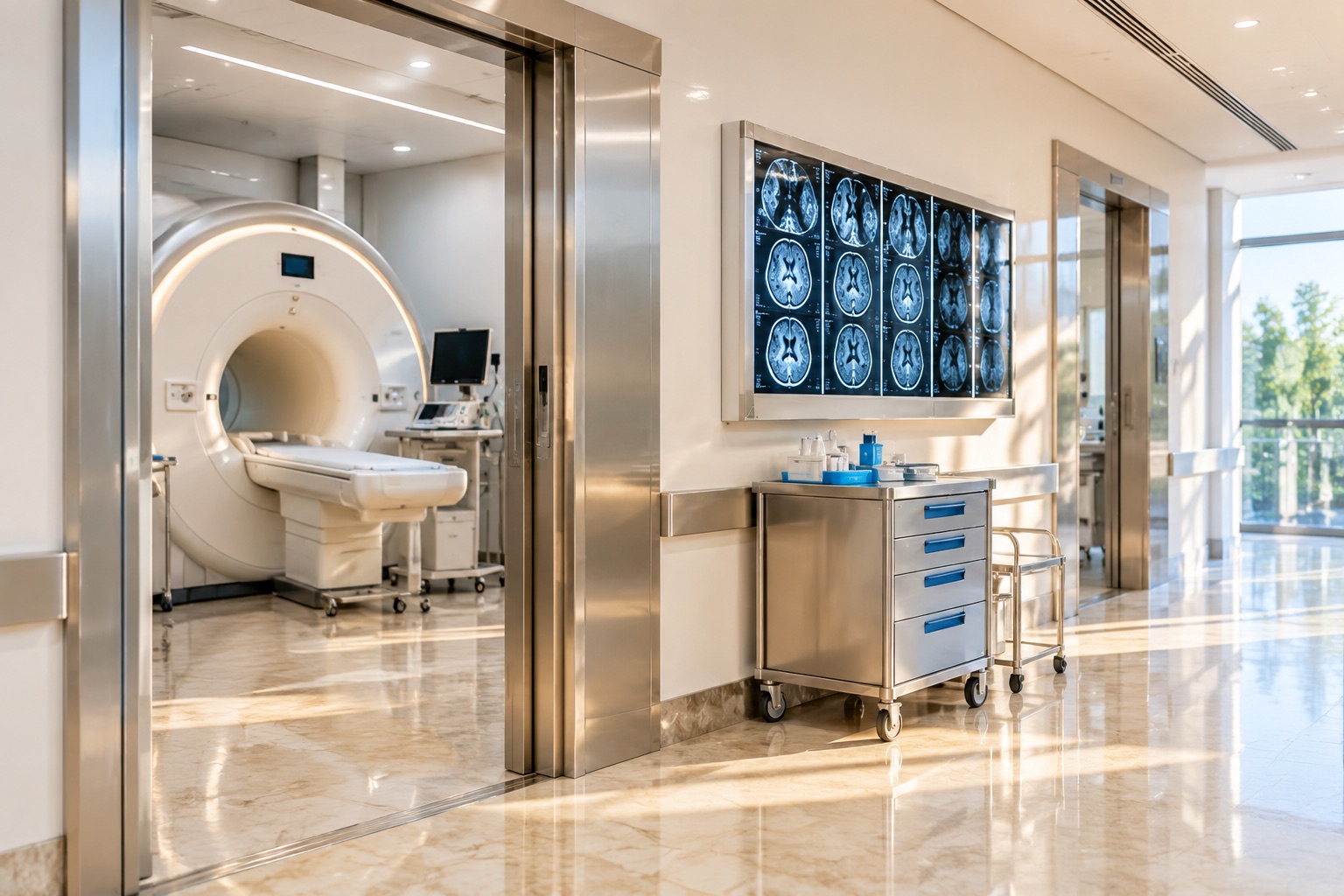
Why Gastric Endoscopy and Nasopharyngeal EBV Screening Matter for East Asian & High-Incidence Cohorts
According to Bayes' theorem, the positive predictive value (PPV) of any screening test rises in proportion to baseline disease prevalence. Because gastric cancer incidence in the general U.S. population is low (~4 to 7 per 100,000), the U.S. Preventive Services Task Force (USPSTF) does not recommend routine upper endoscopy for average-risk Western adults.
However, in East Asia (Japan, South Korea, China) and among first-generation immigrants from high-incidence regions (including Eastern Europe and Andean Latin America), age-standardized gastric cancer incidence is 4-fold to 8-fold higher due to endemic Helicobacter pylori CagA+ strains and dietary nitrosamines:
- Gastric Cancer Screening (Biennial Upper Endoscopy from Age 40/50): National screening programs in South Korea and Japan (and Chinese NHC guidelines for high-risk cohorts aged 40+) recommend H. pylori eradication plus biennial esophagogastroduodenoscopy (EGD). Early detection shifts 60%+ of diagnoses to Stage I mucosal lesions treatable via endoscopic submucosal dissection (ESD), reducing gastric cancer mortality by 30% to 47%. American Gastroenterology Association (AGA) clinical updates support screening first-generation U.S. immigrants from high-incidence regions starting at age 45 to 50.
- Nasopharyngeal Carcinoma (Plasma EBV DNA in Southern China / Southeast Asia): In Guangdong, Guangxi, Hong Kong, and Southeast Asian populations, Epstein-Barr virus (EBV) driven nasopharyngeal carcinoma reaches incidences of 20 to 30 per 100,000. As demonstrated in the landmark Hong Kong trial by Chan et al. (NEJM 2017, n = 20,174), plasma EBV DNA screening achieves 97.1% sensitivity and 98.6% specificity, shifting Stage I/II detection from 20% to 71%.
- Hepatocellular Carcinoma (Biannual Ultrasound + AFP): Recommended globally every 6 months for all chronic Hepatitis B carriers (Asian men >=40, Asian women >=50, or any patient with cirrhosis).
When Screening Becomes "Diagnostic": International Imaging & Endoscopy Cost Comparison
In the United States, while an initial Grade A/B screening test is covered under the ACA, any follow-up exam for a symptom, prior history of polyps, dense-breast supplemental MRI, or lung nodule surveillance is frequently billed under high-deductible diagnostic CPT codes. Below is the empirical fee comparison across four healthcare systems.
| Procedure & Clinical CPT Equivalent | U.S. Commercial Hospital Self-Pay / High-Deductible | U.S. CMS Medicare Allowed Benchmark | UK Private Sector Self-Pay | East Asia Public Tertiary Hospital (Regulated Tariff) |
|---|---|---|---|---|
| 3.0T Multiparametric MRI (Breast or Prostate w/ Contrast) CPT 77049 / 72197 |
$1,800 to $4,200 | ~$420 to $680 | $950 to $1,650 | $140 to $260 (Same-week 3.0T clinical scanners) |
| Low-Dose Helical Chest CT (LDCT) CPT 71271 / 71250 |
$350 to $1,450 | ~$115 to $240 | $450 to $780 | $45 to $85 (High-resolution volumetric CT + AI nodule CAD) |
| Combined Sedated Gastroscopy (EGD) + Colonoscopy CPT 43239 + 45378 (Propofol anesthesia) |
$2,800 to $6,500 | ~$850 to $1,350 | $2,200 to $3,600 | $220 to $420 (Includes NBI magnifying endoscopy + anesthesia) |
| Diagnostic 3D Mammogram + Whole-Breast Ultrasound CPT 77066 + 76641 |
$550 to $1,350 | ~$240 to $360 | $520 to $890 | $80 to $160 |
| Whole-Body 18F-FDG PET-CT (Oncology Staging) CPT 78815 |
$3,800 to $8,500 | ~$1,350 to $1,650 | $2,600 to $3,900 | $980 to $1,380 |
Frequently Asked Clinical Questions
Plain-language answers grounded in USPSTF, ACS, and 1,000-person cohort data.
Why do East Asian medical guidelines screen for stomach cancer while US guidelines do not?
Gastric cancer incidence in Japan, South Korea, and China is 4 to 8 times higher than in the general U.S. non-Hispanic white population. In high-prevalence populations, biennial upper endoscopy (gastroscopy) detects mucosal Stage I tumors that can be cured endoscopically without stomach removal, cutting gastric cancer mortality by over 30%. For first-generation immigrants from East Asia, Eastern Europe, or Andean South America living in Western countries, gastroenterology societies recommend discussing H. pylori testing and baseline upper endoscopy at age 45 to 50.
Source: NCI Gastric Cancer Screening Evidence · WHO IARC GLOBOCAN Incidence Atlas
Why is a diagnostic 3.0T MRI or combined endoscopy 80% less expensive in East Asian public tertiary hospitals than in US hospitals?
Public tertiary hospitals in Japan, South Korea, and China operate under national or provincial fee schedules for diagnostic imaging and endoscopy, where high daily patient volume amortizes capital equipment costs (3.0T MRI, dual-source CT, NBI endoscopy towers) across hundreds of scans per week rather than marking up commercial facility fees.
Source: CMS Medicare Fee Schedule · Colorectal Endoscopy & Coding Dossier